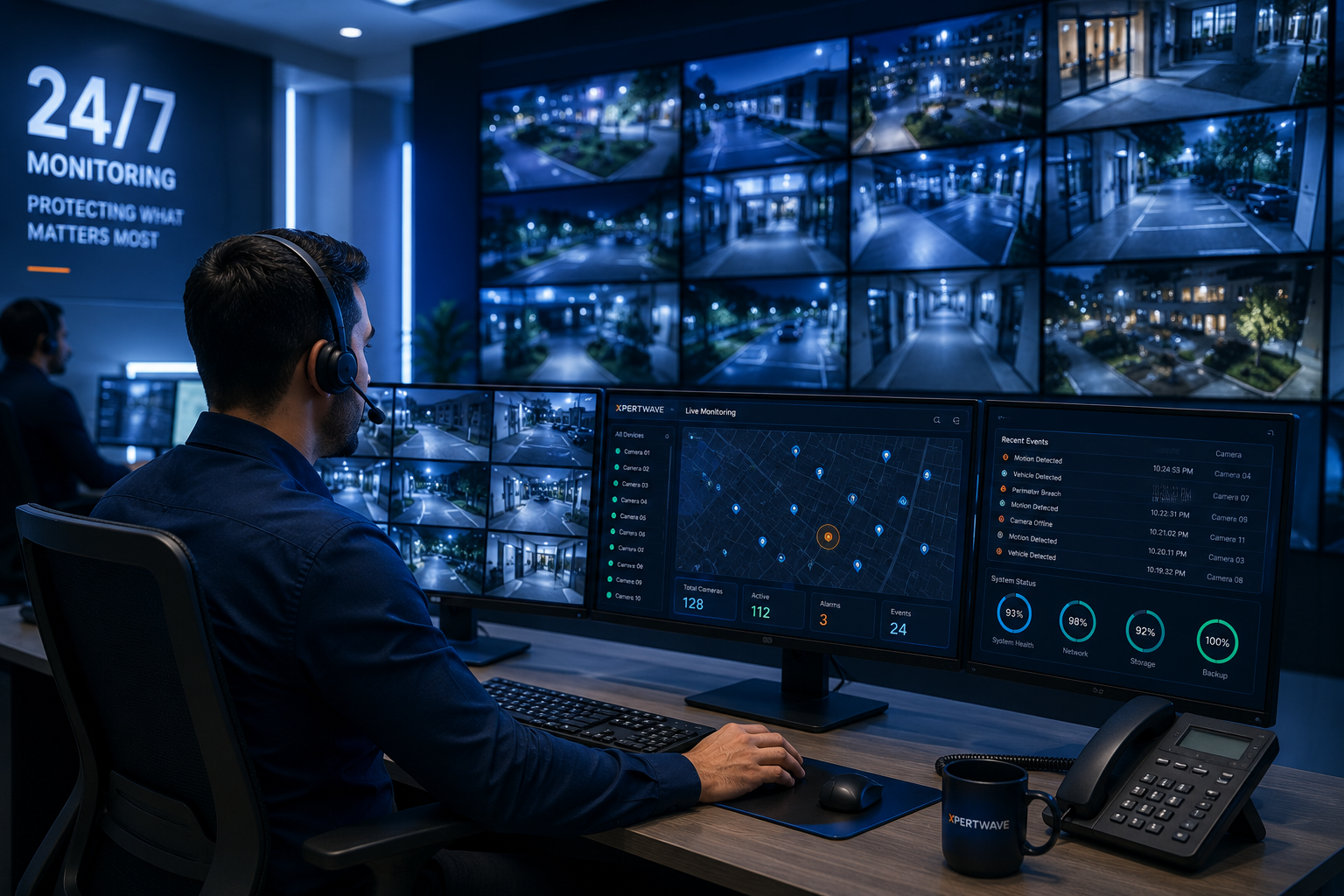
Retail businesses face a constant challenge: protecting merchandise, employees, customers, and profits while maintaining a welcoming shopping environment.
Theft is only part of the problem. Retail shrinkage can result from shoplifting, internal theft, operational errors, unauthorized activity, and other preventable losses. For businesses operating multiple locations, maintaining consistent oversight becomes even more challenging.
Traditional CCTV systems provide valuable recorded evidence, but recording an incident and discovering it hours or days later does not necessarily help prevent the loss.
This is where live CCTV monitoring can make a significant difference.
By having trained monitoring personnel actively observe camera feeds, businesses can identify suspicious activity as it develops and follow established escalation procedures when attention is required.
What Is Retail Shrinkage?
Retail shrinkage refers to the difference between the inventory a business expects to have and the inventory it actually has.
It can occur for several reasons, including:
- Shoplifting and external theft
- Employee or internal theft
- Unauthorized discounts or transactions
- Inventory and administrative errors
- Vendor-related losses
- Operational mistakes
- Damage or unaccounted merchandise
Even relatively small losses can become significant when they occur repeatedly across multiple shifts or store locations.
An effective loss-prevention strategy therefore requires more than simply investigating major incidents. Retailers need better visibility into what is happening throughout their stores.
Why Traditional CCTV Recording May Not Be Enough
Security cameras are now common in retail environments. However, there is an important difference between having cameras and actively monitoring cameras.
A conventional CCTV system may record continuously, but footage is often reviewed only after something has happened.
For example, a store manager might discover missing merchandise, a suspicious transaction, or another incident at the end of a shift. The recorded footage can help determine what happened, but the opportunity to intervene during the event has already passed.
Live CCTV monitoring changes the role of cameras from primarily an investigative tool into a more proactive security and operational resource.
How Live CCTV Monitoring Helps Reduce Retail Theft
With live monitoring, trained personnel can observe selected cameras and watch for behavior or situations that require attention.
Depending on the retailer's monitoring procedures, this can include suspicious customer behavior, unusual activity around restricted areas, unauthorized access, after-hours movement, or other predefined events.
When an incident is identified, the monitoring team can follow the retailer's established escalation process.
This might involve notifying designated store personnel, management, security personnel, or other authorized contacts depending on the situation and agreed procedures.
The objective isn't simply to watch cameras. It is to provide an additional layer of real-time visibility.
Supporting Loss Prevention Beyond Shoplifting
Retail loss prevention isn't limited to customers stealing merchandise.
Internal activity can also contribute to shrinkage. Live monitoring can provide greater visibility around areas such as checkout counters, stockrooms, entrances and exits, high-value merchandise areas, and other sensitive locations.
When combined with clear company policies and appropriate procedures, CCTV monitoring can help management investigate unusual patterns and maintain better operational oversight.
Importantly, monitoring practices should always comply with applicable privacy, employment, and surveillance laws.
Combining CCTV and POS Monitoring
For many retailers, one of the most valuable loss-prevention strategies is combining video surveillance with point-of-sale (POS) monitoring.
Certain transactions may deserve additional attention, such as unusual refunds, voids, cancellations, discounts, or other exceptions defined by management.
When transaction information can be reviewed alongside relevant video footage, businesses gain additional context.
Instead of looking at a transaction only as numbers in a report, authorized personnel may be able to understand what was happening at the checkout counter at the relevant time.
This can make loss-prevention investigations more focused and help retailers identify patterns that might otherwise be difficult to recognize.
Improving Oversight Across Multiple Locations
Managing security becomes increasingly difficult as a retail business expands.
An owner with one store may be able to visit frequently and remain closely involved in daily operations. An owner responsible for five, ten, twenty, or more locations cannot physically observe every store at the same time.
Centralized remote CCTV monitoring can provide greater visibility across multiple locations without requiring management to constantly move between stores.
A monitoring operation can follow consistent procedures across locations, helping businesses maintain a more standardized approach to security and incident reporting.
This can be particularly valuable for retail chains, convenience stores, smoke shops, gas stations, and other businesses operating extended hours.
Monitoring High-Risk Areas
Not every camera requires the same level of attention.
A well-designed monitoring strategy can prioritize areas where incidents or losses are more likely to occur.
These may include:
Entrances and exits
Useful for observing customer movement and unusual activity around access points.
Checkout counters
Important for transaction-related oversight and identifying unusual activity.
High-value merchandise areas
Products that are expensive, small, or easily concealed may require greater attention.
Stockrooms and restricted areas
Monitoring can help identify unauthorized access and unusual movement.
Parking areas and exterior cameras
Exterior monitoring can provide additional awareness around the property, particularly during opening and closing hours.
The exact monitoring strategy should be developed according to each store's layout, operating hours, risk profile, and business requirements.
Live Monitoring Can Support Employee Safety
Retail employees may encounter situations involving aggressive customers, suspicious individuals, disputes, or other security concerns.
Live monitoring provides another set of eyes on the location.
When monitoring personnel recognize a potentially concerning situation, they can follow predetermined escalation procedures.
This is particularly valuable during late-night operations, opening and closing periods, or shifts with fewer employees present.
Live monitoring should complement—not replace—appropriate workplace safety procedures and emergency protocols.
Better Incident Documentation
Effective security requires more than identifying an incident.
Businesses also need accurate information about what occurred.
A structured monitoring operation can help maintain records of relevant incidents, including the approximate time, location, camera involved, type of activity observed, and actions taken according to established procedures.
This can make it easier for management to review incidents and identify recurring problems.
Over time, these observations can also help businesses determine where additional operational controls, employee training, camera coverage, or security procedures may be required.
Recorded CCTV vs. Live CCTV Monitoring
Both approaches have value, but they serve different purposes.
Recorded CCTV is particularly useful for reviewing incidents after they occur, investigating disputes, documenting events, and maintaining historical footage.
Live CCTV monitoring adds the ability to identify selected events while they are occurring and initiate an appropriate response based on predefined procedures.
For many retail businesses, the strongest approach is not choosing one or the other. It is combining reliable video recording with professional live monitoring.
That provides both real-time awareness and recorded evidence.
Is Live CCTV Monitoring Suitable for Every Retail Business?
The appropriate monitoring solution depends on factors such as store size, operating hours, location, number of cameras, merchandise type, previous security incidents, and overall risk.
Businesses that may particularly benefit include:
- Multi-location retail stores
- Convenience stores
- Smoke shops
- Gas stations
- Stores operating late at night
- High-value merchandise retailers
- Businesses experiencing recurring shrinkage
- Locations requiring stronger operational oversight
The monitoring strategy should be customized rather than applying exactly the same procedures to every business.
Building a More Proactive Retail Security Strategy
CCTV cameras alone are only one component of retail security.
The greatest value comes from combining the right technology with trained monitoring personnel, appropriate camera placement, clear escalation procedures, management oversight, and effective loss-prevention policies.
Instead of asking only:
“What happened?”
after an incident, live monitoring gives businesses an opportunity to identify:
“What is happening right now?”
That shift from reactive investigation toward proactive awareness can help retailers strengthen security, improve operational visibility, and better protect their businesses.
24/7 Live CCTV Monitoring with XPERTWAVE
XPERTWAVE provides 24/7 Live CCTV Monitoring and Loss Prevention & POS Monitoring solutions for businesses requiring greater visibility across their operations.
Our monitoring solutions can support single and multi-location businesses with live video monitoring, incident observation, escalation procedures, opening and closing verification, and other monitoring requirements based on the needs of the business.
Whether you operate a single retail location or manage multiple stores, the right monitoring strategy can provide greater visibility into what is happening across your business.
Want to strengthen your retail security and loss-prevention strategy? Contact XPERTWAVE to discuss a monitoring solution for your business.